Industville’s newest collection, Corby, explores the beauty of contrast.
Drawing inspiration from the restraint and balance of mid-century design, the collection brings together two very different materials: textured cast metal and luminous alabaster. One is weighty, tactile and deliberately imperfect. The other is smooth, naturally varied and softly translucent.
Together, they create a collection where material, form and light are given equal importance.

A study in contrast
Mid-century design was shaped by a belief that form and function should exist in harmony. Corby takes that principle and develops it through material contrast, pairing substantial cast forms with softly sculpted alabaster.
Clean curves and balanced proportions reference the simplicity of mid-century silhouettes, while the surfaces themselves introduce another layer of character.
Rather than seeking uniformity, Corby celebrates the differences between its materials. The textured metal gives each piece a sense of substance and permanence, while alabaster introduces softness, natural variation and a warmer quality of light.
It is this balance between the raw and the refined that sits at the heart of the Corby collection.
[SIDE-BY-SIDE]


Shaped through sand casting
The metal elements within Corby are created using sand casting, a production technique with origins stretching back thousands of years.
The process sees molten metal poured into a mould formed from compacted sand. Once cooled, the casting is removed, leaving behind a surface shaped partly by the precision of the mould and partly by the natural irregularities of the casting process.
Historically, cast metal used within mid-century design was often extensively polished to produce a smooth and highly refined finish. With Corby, the approach is deliberately different.
Rather than removing every trace of the casting process, the surface is preserved.
Subtle texture, variation and markings remain visible across the metal, allowing the way each piece has been made to become part of its final character. The result feels considered without becoming overly polished, giving the collection a tactile quality that can be appreciated both up close and from across a room.
Finished in aged brass or bronze brass, the cast surfaces catch light differently throughout the day, revealing changes in depth and texture as the surrounding light shifts.
[SIDE-BY-SIDE]


The softness of alabaster
Against the texture and visual weight of the metal sits alabaster.
Naturally veined and translucent, alabaster brings a very different character to Corby. Each piece of stone has its own markings and tonal variation, meaning no two fittings are exactly alike.
When the light is switched off, these natural details remain visible within the stone. When illuminated, they become more pronounced as light passes softly through the alabaster, revealing layers of veining and variation within the material.
This diffused glow is reflected against the surrounding metal finishes, softening the stronger cast forms and bringing warmth to the overall composition.
The relationship between the two materials becomes particularly apparent when Corby is illuminated. The metal provides definition and structure, while the alabaster shapes and diffuses the light around it.
[SIDE-BY-SIDE]


[P2-P2]
Form shaped by material
Corby’s silhouettes have been kept deliberately restrained, allowing the materials to remain central to the design.
Rounded alabaster forms sit alongside curved and linear cast elements, creating a sense of symmetry without making the pieces feel overly formal. The result is a collection that feels sculptural while remaining easy to introduce into an interior.
The contrast also means the fittings have a presence when they are not illuminated.
Texture, proportion and material remain visible throughout the day, allowing Corby to function as part of the wider interior rather than simply as a source of light.
The collection includes pendants, wall lights, picture lights and diffusers, with the same material language carried throughout. Individual pieces can stand alone, or different Corby lighting designs can be introduced across a space to create a subtle sense of continuity.

Interiors where materials matter
Corby has been designed for interiors where materials are allowed to play a visible role.
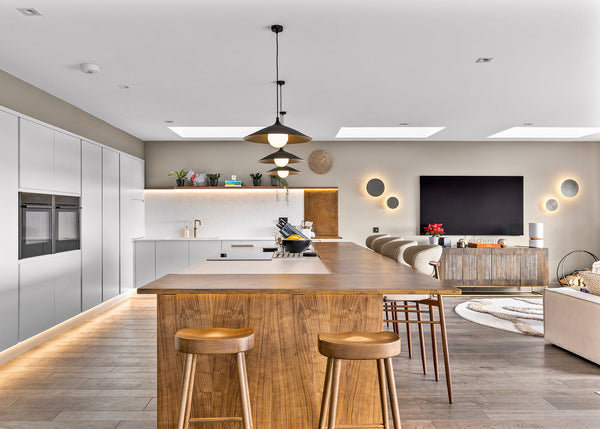
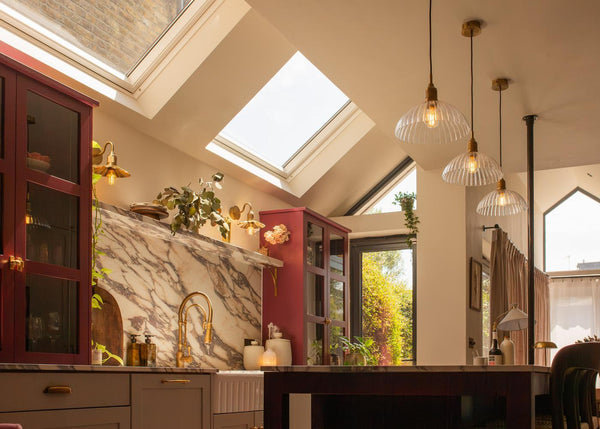
Against painted walls or plaster finishes, the cast metal introduces depth and texture. Alongside timber, stone and natural fabrics, its warmer finishes sit comfortably within a more layered material palette.
The alabaster provides a softer counterpoint, bringing natural pattern and gentle variation into schemes where surfaces might otherwise feel too uniform.
This makes the collection particularly suited to spaces built around considered combinations of colour, texture and material.
Rather than demanding attention through ornament, Corby creates interest through the details of how it is made.
[SIDE-BY-SIDE]


[P3-P3]
Lighting with substance
Corby reflects a wider approach to lighting at Industville, where the character of a fitting begins with its materials.
By retaining the markings of the casting process and pairing them with the natural variation of alabaster, each piece carries subtle evidence of how it has been produced.
The resulting collection brings together centuries-old techniques and mid-century influence within a contemporary form, balancing structure with softness, texture with translucency and precision with natural variation.
Explore the full Corby collection and discover cast metal and alabaster lighting designed to bring warmth, texture and depth to the interior.