7 Ideas Shaping the Way We Live
A beautifully designed room can feel completely different once the sun goes down. Colours change, materials take on new character, and a carefully placed light can turn an overlooked corner into somewhere you want to spend the evening.
As we look towards 2027, some of the most interesting interior design trends are less about adopting a particular style and more about how we experience the spaces around us. Richer colour, natural materials and sculptural forms are all part of the conversation, but so is a growing appreciation for lighting that works with the way we live.
At Industville, we believe the most enduring interiors are built around considered decisions, not passing fashions. With that in mind, we've explored seven lighting and interior design trends for 2027, looking at what is changing, why it matters and how to bring these ideas into your own home.

1. The most important lighting trend isn't a light at all
For years, choosing a statement pendant or chandelier has been one of the defining decisions in a room. That isn't going away, but the conversation is becoming more interesting. Rather than relying on a single fitting to do everything, designers are considering how different sources of light work together.
It's a shift supported by research. In its 2027 Kitchen Trends Report, the National Kitchen & Bath Association found that 84% of surveyed industry professionals agreed kitchens would increasingly incorporate multiple layers of lighting. A further 78% saw lighting becoming a design feature in its own right, rather than simply a functional necessity.
Consider a kitchen island. Three beautiful pendants might establish the character of the room, but they don't necessarily provide all the light needed for chopping vegetables or preparing dinner. Under-cabinet lighting, discreet architectural lighting and decorative wall lights can each serve a different purpose.
[SIDE-BY-SIDE]


[/SIDE-BY-SIDE]
[P1-P1]
The same principle works in living rooms, bedrooms and dining spaces. A central light provides an important foundation, while smaller sources introduce warmth and definition around the places where life happens.
Our advice: Before introducing another fitting, spend an evening noticing how you use the room. Where do you need to see clearly? Where would a softer pool of light be more comfortable? Planning around these activities often produces a better result than simply trying to make every corner equally bright.
For a more detailed introduction, explore our guide to layering lighting at home.
2. Colour is finding its confidence again
After years of pale neutrals dominating interior design, richer colours are becoming an increasingly confident choice. Deep greens, burgundy, terracotta and warm brown tones are finding their way onto walls, cabinetry and furniture, often alongside natural timber and contrasting textures.
Green is particularly prominent in the 2027 forecasts. Benjamin Moore has selected Webster Green, a deep, characterful shade, as its Colour of the Year for 2027. Its wider palette also brings together tawny browns, muted pastels and ochre tones.
But the appeal of these colours goes beyond the paint chart. Richer schemes can create a sense of intimacy, giving rooms more character without requiring more furniture or decoration. Lighting becomes particularly important when working with these darker, more saturated shades.
[SIDE-BY-SIDE]


[/SIDE-BY-SIDE]
[P2-P2]
A dark green wall might appear vibrant in natural daylight, but take on an entirely different character in the evening. Warm light can bring out the richness of certain colours, while the placement of a wall light or table lamp creates areas of brightness that prevent a scheme from feeling flat.
One detail worth understanding is colour rendering. Two bulbs with the same warm-white colour temperature can make the colours and materials around them appear slightly different. A bulb with a high Colour Rendering Index (CRI), ideally 90 or above, can be particularly worthwhile where the accurate appearance of colour matters.
Our advice: Always view paint samples under the lighting you intend to use. A colour chosen on a bright Saturday afternoon may feel quite different once the curtains are drawn. Testing it in both conditions helps you understand how the room will actually look and feel throughout the day.
3. When the material becomes part of the light
One of the most compelling directions for 2027 is the growing appreciation of materials with natural character. Veining, grain, surface texture and subtle variation are increasingly being celebrated rather than concealed.
It's a movement reflected in a recent British Institute of Interior Design feature, where Paul Moody of Havwoods discusses an appetite for authentic, tactile interiors and the individuality of real materials.
In lighting, this becomes particularly interesting because the material does more than determine how a fitting looks. It influences the way we experience the light itself.
Take alabaster. Its natural translucency allows light to pass through the stone, revealing delicate veins and variations that might be less apparent when the fitting is switched off. Every piece has its own character, making the material an integral part of the design.
[SIDE-BY-SIDE]


[/SIDE-BY-SIDE]
Glass offers another possibility. Ribbed and textured surfaces change the way light is transmitted and reflected, while clear glass allows the bulb and internal details of the fitting to become part of its appearance.
Metal introduces a different quality. Its weight and structure can give a light a defined silhouette, while the surface itself can become a decorative feature. In our Corby collection, the raw texture of sand-cast metal sits alongside the softer translucency of alabaster, allowing the contrast between the two materials to shape the design.
There is a practical consideration here, too. A beautifully diffused light is not always the brightest or most effective option for detailed tasks. Materials such as alabaster and fabric can be particularly effective for atmosphere, while directed lighting may be preferable when visibility is the priority.
Our advice: When choosing a new light, ask what the material contributes beyond its appearance. Does it soften the bulb? Create interesting reflections? Direct light towards a particular surface? Understanding the effect can help you choose something that will remain satisfying long after its initial appeal.
4. Sculptural lighting takes a softer shape
Statement lighting remains an important part of interior design for 2027, but the definition of a statement is evolving. Instead of relying purely on size or elaborate decoration, designers are exploring proportion, material and distinctive silhouettes.
The Light + Building 2026/27 trend forecast highlights sculptural forms, retro-modern influences and the use of textiles to filter light. It's an interesting combination, bringing visual presence and softness together.
Fabric pendants offer a particularly good example. Their shapes can feel architectural, but the material introduces a softer quality than a solid metal shade. When several forms are grouped, the relationship between their proportions can be just as interesting as the individual fittings.

Our Burnham designs explore this relationship through different silhouettes, creating opportunities for both individual statement pieces and considered arrangements of light.
The important distinction is that sculptural lighting doesn't have to dominate a room. A generously sized shade made from a light-coloured or translucent material can feel less visually imposing than a smaller, heavier design. Equally, a single pendant with a particularly distinctive profile might provide all the interest a space needs.
Proportion matters, especially over dining tables and kitchen islands. A beautiful pendant should feel connected to the furniture below it, rather than suspended at an arbitrary height. It also needs to preserve comfortable sightlines and enough clearance for people to move naturally around the space.
Our advice: Consider how a fitting will look from different positions in the room, including when you're sitting down. If you're planning a pendant arrangement, our pendant hanging height guide offers useful starting points.
5. The beauty of things that don't quite match
One of the more refreshing ideas emerging for 2027 is a move away from interiors that feel too carefully coordinated.
Ambiente's official 2027 forecast introduces the theme of Coexistence, exploring how different styles, periods and materials can enrich one another when brought together. The emphasis is less on committing to a single aesthetic and more on finding combinations that feel personal.
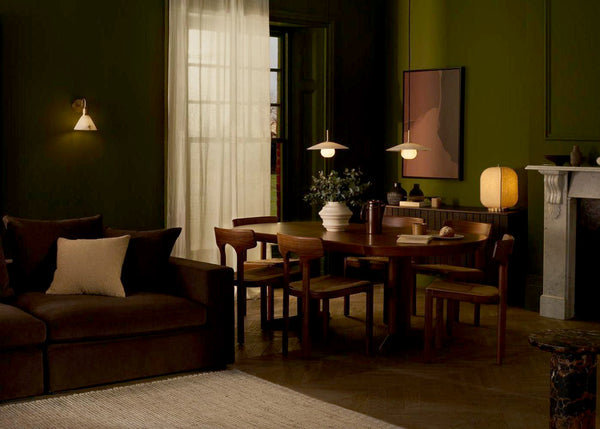
For lighting, this opens up some interesting possibilities. A traditional brass pendant can sit comfortably above a contemporary dining table. Textured metal can work against polished stone. A room with historic architectural details doesn't necessarily need period-style lighting.

[P3-P3]
What makes these combinations successful is usually not how closely everything matches, but the relationships between individual details.
For example, a warm metal finish can connect with the grain of timber furniture, while the rounded silhouette of a pendant might echo the shape of a dining table. These smaller connections create a sense of cohesion without making every element identical.
The same thinking applies to mixing metal finishes. Brass, bronze and darker metals can coexist in one space, particularly when there is a deliberate balance between them. Repeating one finish in a few considered places can make the combination feel intentional.
Our advice: If a room feels overly matched, introducing one contrasting material or silhouette can make it more interesting. The key is to create a relationship with something already in the room, rather than selecting an entirely unrelated statement piece.
6. Smaller spaces are taking on greater importance
For a long time, open-plan living was treated as the ideal. Large, uninterrupted spaces promised flexibility, natural light and somewhere for every part of family life to happen.
But our relationship with these spaces is changing. The NKBA's 2027 research identifies growing interest in defined kitchen zones and partially separated layouts. Rather than always opening rooms further, designers are considering how different activities might benefit from more individual spaces.
That doesn't necessarily mean building new walls. Sometimes the most effective separation comes from how a room is furnished, arranged and lit.
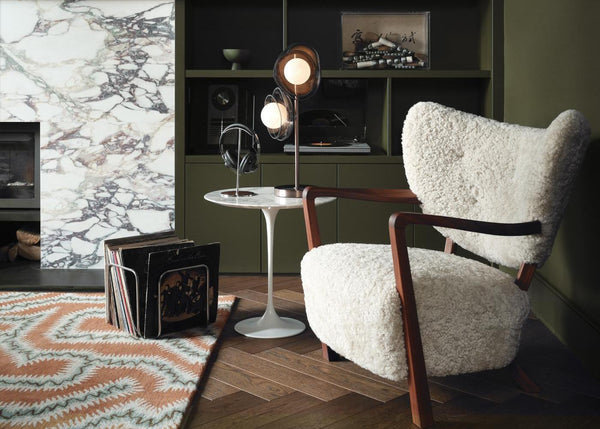
A reading chair beside a floor lamp, for example, immediately establishes a place to settle down. A compact listening area can feel distinct from the surrounding room when the lighting is lower, softer and focused around where someone sits.

The interest in listening rooms is a particularly good example of a wider desire for spaces designed around how we spend our time. Music, reading and conversation all benefit from an environment that feels comfortable for the activity, rather than simply looking attractive in a photograph.
Our guide to designing a listening room explores how lighting, furniture and acoustics can work together to create a more personal space.
This approach is equally relevant to smaller homes. A dedicated activity doesn't always need an entire room. Sometimes a carefully positioned table lamp and a comfortable chair can be enough to give one corner a stronger sense of purpose.
Our advice: Think about the moments you most enjoy at home. Is there somewhere you like to read, listen to music or sit with a cup of coffee? Giving that place its own source of light can help define it, even when it shares a room with several other activities.
7. Lighting that changes as the day does
A room rarely has just one purpose, so why should it have only one lighting setting?
As homes become more adaptable, there's growing interest in lighting that can respond to different activities and times of day. This includes everything from dimmable decorative fittings to more sophisticated lighting controls.
But flexibility doesn't have to involve an elaborate smart-home system. Often, it begins with something much simpler: separate switches, carefully chosen bulbs and the ability to use different combinations of lights.
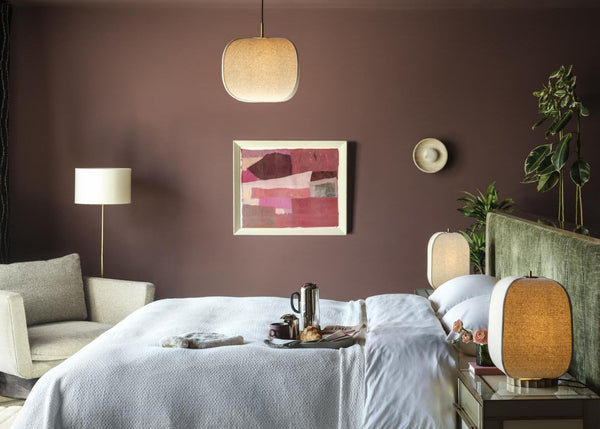
A bedroom is a good example. Brighter lighting might be useful when getting dressed or cleaning, but it can feel uncomfortable when you're preparing to sleep. A bedside lamp, wall light or softer overhead source allows the atmosphere to change without requiring any major changes to the room.

Colour temperature also plays an important part. Warm-white bulbs, typically around 2700K, are often a comfortable choice for relaxed residential spaces, while warmer options can create a softer evening atmosphere. Areas used for detailed tasks may benefit from different lighting.
One detail people sometimes overlook is the difference between dimmable and warm-dim bulbs. A conventional dimmable bulb reduces its brightness but may retain the same colour temperature. A warm-dim bulb is designed to become warmer in colour as it dims, more closely resembling the behaviour of traditional incandescent lighting.
It's a subtle difference that can have a noticeable effect on the atmosphere of a room. Whatever you choose, it's important to check that the bulbs, fittings and dimmers are compatible.
Our advice: Think about a room at its brightest and at its most relaxed. If you can comfortably move between those two settings, your lighting will be much more useful throughout the day.
What will really matter in 2027?
Looking across these interior design trends, there's a common thread. The focus is shifting from simply creating beautiful rooms towards understanding how those rooms work and how they make us feel.
That might mean choosing a richer colour and discovering how it changes under warm light. It could mean introducing a natural material whose individual character becomes more apparent every evening, or finding a better way to light a space you already use and love.
There's no need to embrace every new idea. In fact, the most interesting interiors often come from knowing which ones to leave behind.
Before making a change, consider how your space feels after dark, what you want the lighting to achieve and whether the materials and designs you've chosen will continue to appeal beyond the season.
At Industville, we create lighting with substance, using materials such as stone, glass and metal to bring character and atmosphere into everyday spaces. Our approach is rooted in the belief that considered design should be lived with and enjoyed, not simply admired.
Explore our lighting collection or visit our London showroom to discover how materials, proportion and light can work together in your own space.