At Industville, we have never been overly fond of the word “trend.” Design, at its best, should feel timeless rather than temporary. Yet trends do play a role in shaping the wider conversation about how we live, what we value and how our spaces evolve. They highlight shifts in mood and material that reflect something deeper about culture and craftsmanship.
As we look ahead to 2026, the focus is turning toward warmth, tactility and authenticity. Interiors are moving away from fast, decorative change and toward ideas that endure. These ten new directions reveal how design can be both relevant and lasting, rooted in material honesty, human connection and light that enhances everyday life.
Ten trends defining 2026
1. Earth tones, elevated
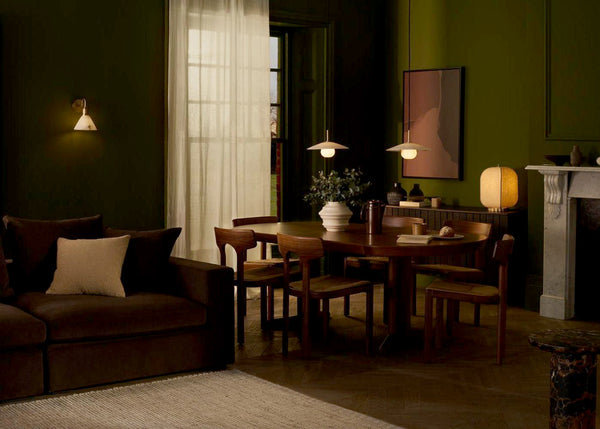
Earth tones have moved beyond rustic charm to something richer and more architectural. Shades of terracotta, ochre and brown create warmth that feels intelligent and lasting. When paired with natural materials like linen, plaster and stone, they form interiors that feel effortless yet deeply comforting. These are colours that calm without dulling the senses.

Soft, directional light enhances their texture. A warm white glow along a wall or ceiling can highlight subtle tonal shifts and shadows, giving life to these natural hues. It is not about brightness, but balance.
2. Early modernism, edited
Early modernism’s clean lines and functional beauty are finding relevance again, but this time with warmth. The strict geometry of the past is softened through material, timber alongside brass, curved glass beside matte metal. It is precision with personality.
[SIDE-BY-SIDE]


[/SIDE-BY-SIDE]
Lighting mirrors this sensibility through structured yet human forms. The Knurled Lighting Collection captures this look perfectly, balancing craftsmanship and restraint. Think architectural silhouettes that do not dominate, but define.
3. Newstalgia
Newstalgia is about reinterpreting the familiar. It layers time periods, creating a dialogue between vintage comfort and modern clarity. Instead of full retro revival, it is a mood, the texture of worn wood, a mid century pendant over a minimalist dining table, a small nod that bridges eras. The charm lies in its honesty.
[SIDE-BY-SIDE]


[/SIDE-BY-SIDE]
A heritage inspired pendant like Henley or fluted glass sconce (like this Brooklyn) fits seamlessly into this story. These pieces introduce memory, not mimicry, design that feels lived in from the start.
4. Micro luxury
Luxury is no longer defined by size but by care. Micro luxury celebrates the small spaces we inhabit every day, an alcove, hallway or reading corner, refined through detail and light. Each decision matters more, every material and fitting chosen with precision.
[SIDE-BY-SIDE]


[/SIDE-BY-SIDE]
Compact lighting helps these spaces work harder. A small wall sconce or table lamp creates intimacy and function without crowding. Micro luxury is not about excess, it is about refinement, the quiet confidence of good design scaled perfectly.
5. Statement stone
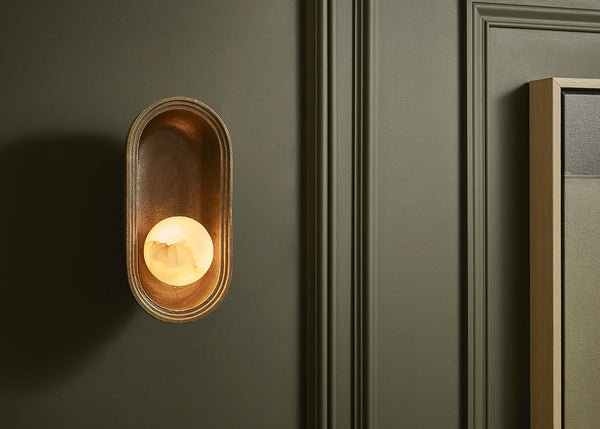
Stone is stepping into the spotlight. Travertine, marble and alabaster are being used as focal points, not just surfaces. Their veining, grain and translucency bring natural drama and weight to interior spaces. They lend permanence, an antidote to disposable design.

The Alabaster Lighting Collection captures this beautifully. When lit, alabaster diffusers give off a soft, organic glow that feels both sculptural and serene. These materials need little decoration, their natural beauty is enough.
6. Heritage patterns and a 60s revival
Pattern is returning with rhythm and restraint. Designers are revisiting stripes, checks and mid century repeats, reimagining them through muted palettes. The result is nostalgic but grounded, providing visual interest without excess. These motifs help reconnect design with the joy of decoration, once considered too bold to be refined.
[SIDE-BY-SIDE]


[/SIDE-BY-SIDE]
Lighting that feels timeless, such as a simple glass globe or aged brass fitting, balances the energy of pattern. When the backdrop has movement, lighting should offer calm.
7. Colour drenching with depth
Colour drenching continues to evolve. What began as a bold statement has matured into a study in tone and shadow. Wrapping walls, ceilings and woodwork in one colour creates an immersive sense of calm. The key is layering, a mix of matte and gloss finishes, soft furnishings and texture keep it from feeling flat or overwhelming.

This trend speaks more to paint and surface than lighting, but how light interacts with colour remains crucial. Consider how natural daylight and soft evening light alter the depth of hue, it is this dynamic play that gives drenched rooms their soul.
7. Craft as character
Craft is no longer a niche, it is the new definition of luxury. Imperfection, texture and visible process are celebrated for the life they bring. From hand thrown ceramics to patinated metals, these pieces connect us to the maker’s touch. Spaces that feel crafted also feel more grounded and emotionally resonant.
[SIDE-BY-SIDE]


[/SIDE-BY-SIDE]
Image credits: @simplyhouseandhome and @country.life.eve
Lighting becomes part of this conversation through honest materials, aged brass, ribbed glass and woven shades. These are not mass produced objects but lasting companions, each with subtle variations that add authenticity.
9. Brutalism, softened
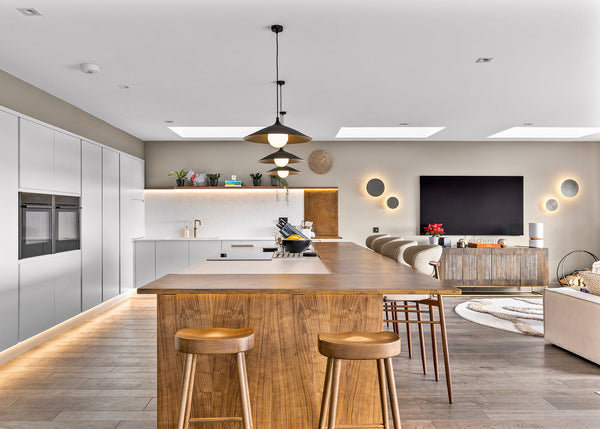
Brutalism is finding tenderness. Designers are borrowing its honesty and structure but pairing it with warmth. Textured plaster, limewash and concrete form the backdrop, while soft furnishings, timber and gentle light bring contrast. The balance between weight and warmth is what makes it work.
[SIDE-BY-SIDE]


[/SIDE-BY-SIDE]
Directional wall lights or subtle up lighting can highlight these surfaces, creating a sculptural play of light and shadow. It is a dialogue between hard and soft, raw and refined.
10. The floor lamp revival
Floor lamps are back in focus as flexible tools of design. They zone open spaces, frame furniture and offer mood without the permanence of wiring. This resurgence speaks to how people live, adaptable, layered and comfortable. Floor lamps add a sculptural quality to corners and reading spaces, transforming them instantly.

Look for designs that combine height, form and texture. They are as much architectural detail as they are light source, ideal for adding atmosphere where wall lights cannot go.
How to apply this with a considered approach
Start with feeling rather than theme. Think about the mood you want to create, then build around materials and light that support it. Earth rich tones and crafted surfaces bring warmth, while layered lighting transforms function into atmosphere. Whether your space is large or compact, the key is intention, every decision considered, every finish purposeful.
A new rhythm for design in 2026
2026 marks a shift in how we think about interiors. It is no longer about trends that impress but design that endures. Spaces are becoming slower, more human and more attuned to light. They favour natural materials, quiet colour and craftsmanship that shows its making. Light, texture and tone work together to create balance, a kind of visual calm that welcomes you in and makes you stay.
At Industville, this is where design lives, in the details that last, the materials that age beautifully and the light that changes everything. Explore crafted pieces that bring these ideas to life and shape spaces built to be lived in, not styled for a moment.