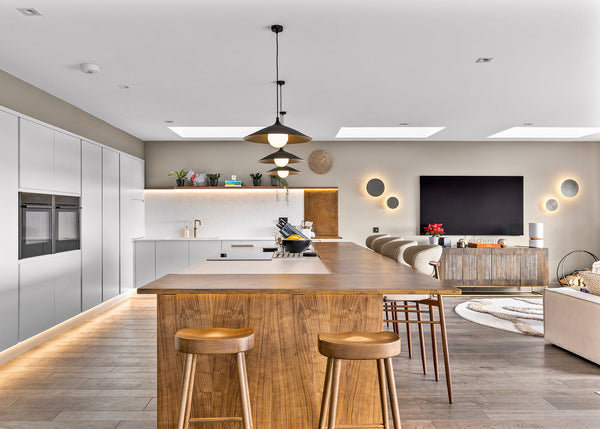
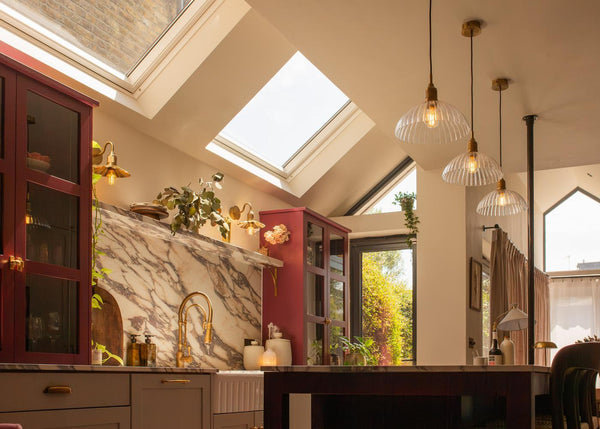
When planning a renovation, lighting is often treated as a finishing touch. In reality, it should be one of the first decisions you make. Lighting shapes how a space feels, how it functions after dark, and how comfortable it is to live in day to day.
From open plan kitchens to calm bedrooms and sociable living spaces, the right lighting brings balance, warmth, and usability. It can also prevent some of the most common renovation regrets, from poorly placed pendants to switches in the wrong spot.
This guide breaks lighting planning into four simple steps. No jargon, no overthinking. Just a clear, practical approach to help you design a space that works beautifully from morning through to evening. Here are our four steps for a smooth renovation project.
- Picture how you want the space to feel
- Lock in your layout first
- Create a lighting plan before electrics begin
- Choose fixtures that suit the space

Step 1. Picture how you want the space to feel
Before considering fittings, finishes, or styles, start with atmosphere.
Ask yourself how you want the room to feel in the evening. Relaxed or lively. Intimate or open. Calm or energising. Lighting defines the emotional tone of a space once the sun goes down, and two identical layouts can feel completely different depending on how they are lit.
Simple tip: try describing the room in three words before planning anything else. Those words will guide every lighting decision that follows.
If you are gathering ideas at this stage, browsing different inspirational spaces can help clarify what atmosphere you are naturally drawn to.
[SIDE-BY-SIDE]


[/SIDE-BY-SIDE]
[P1-P1]
Step 2. Lock in your layout first
Lighting only works when it follows how the space is used.
Before designing your lighting, it is important to know where key furniture will sit, how the room will be walked through, which walls will remain clear, and where built-in elements such as kitchens or storage will live.
Pendant lights are positioned over tables. Wall lights rely on free wall space. Reading lights need to sit beside seating. If the layout changes, the lighting should change with it.
Why this matters: moving a light on a drawing is simple. Moving it after plastering is costly and disruptive.
This is also the point where it helps to consider whether your space will benefit more from ceiling lights, wall lighting, or a combination of both, depending on the proportions of the room.

[P2-P2]
Step 3. Create a lighting plan before electrics begin
This is the most important practical step of the whole process.
During first-fix electrics, cables are installed, back boxes are set into walls, and ceiling cut-outs are prepared. Once this stage is complete, changes become far more difficult.
Before electrics begin, your lighting plan should confirm where each light will go, what type of fitting it will be, where switches will be positioned, which lights will be dimmable, and whether any spaces such as bathrooms or outdoor areas require specialist fittings.
Simple rule: if the electrician is booked, your lighting plan should already be finished.
If you would like more detail on how different types of light work together, you can also read our guide to layering lighting at home, which explores how ambient, task, and accent lighting create balance in a space.
It is also worth checking early whether your renovation includes areas that require specific safety ratings, such as bathroom lighting or outdoor lighting, as these often influence wiring and placement.
[SIDE-BY-SIDE]


[/SIDE-BY-SIDE]
@mjinteriors
Step 4. Choose fixtures that suit the space
Once your plan is set, you can begin selecting the lights themselves.
Ceiling height will influence whether pendants or flush fittings work best. Available wall space determines whether wall lights are practical. Materials such as stone, plaster, wood, or metal will affect how light reflects and spreads. Even the colour temperature you choose can subtly shift the mood of a room.
Hardwired lighting forms the foundation of the design. Table and floor lamps can always be added later, but the core lighting should feel intentional from the start.
You can explore our collections of pendant lights, wall lights, floor lamps, and table lamps for inspiration when you reach this stage.

[P3-P3]
A simple summary
If you remember nothing else, remember this:
- Decide how you want the space to feel
- Finalise the layout
- Create a lighting plan before first-fix electrics
- Choose fixtures that suit the space
Conclusion
A renovation is only truly successful when a space feels just as good in the evening as it does in daylight.
Thoughtful lighting planning protects your design decisions, avoids unnecessary compromises, and helps create rooms that feel natural to live in, season after season.
If you are exploring options for an upcoming project, our lighting collections are designed to bring warmth, balance, and character to spaces of every scale.
If you are working on a larger project or would like advice, our team is always happy to help.