In conversation with Design Director Inge Watrobski of the Heartwood Collection on shaping atmosphere, craft and permanence at The Woodman, Southgate, and how Industville lighting transformed the atmosphere.
Quietly Considered
When The Woodman opened its doors, there was no sense of reveal in the theatrical way new hospitality spaces often announce themselves. Instead, there was a gentle recognition. People walked in and seemed to understand it immediately. Not as a “new venue”, but as somewhere that already belonged to them.
That response, perhaps more than anything else, defines the work of designer Inge Watrobski.
The Woodman is the 35th pub within the Heartwood Inns collection, and its refurbishment was approached less as a launch and more as a careful re-rooting. A new rear extension, layered seating spaces and a steady rhythm of weekly gatherings have quietly returned the building to daily life. Within days of opening, locals were already returning for coffee, meeting neighbours and settling into familiar corners.
For Inge, that was the real brief.
You often speak about places rather than projects. What did The Woodman represent to you?
Inge: "Well it is really all about the places, not the projects. We don’t generally design for opening day. Opening day is simply the start of the building’s next chapter. A pub proves itself in quotidian moments: ordinary evenings, the same table chosen each week, quiet midweek lunches, familiar conversations.
With The Woodman, the intention was to restore reassurance. Not nostalgia, and not trend-led excitement. Just a place that feels dependable and properly rooted in its neighbourhood. When a space feels instinctively understood, you know it’s working."
[SIDE-BY-SIDE]


[/SIDE-BY-SIDE]
[P1-P1]
Heartwood pubs often become genuine community spaces. Did that influence how you approached this one?
Inge: "Always. It’s what we design for. A pub cannot rely on how it feels at peak trading only. It must work at 10am on a Tuesday as well as 8pm on a Friday. That breadth of use shapes every decision.
We design for rhythm. Brighter tables near windows for daytime use. More sheltered corners for evening conversation. Shared tables that allow groups to gather without dominating the room. When weekly rituals begin to form; music evenings, local meetings, informal coffees, the interior needs to flex to hold these comfortably.
We’re not designing a backdrop. We’re designing the framework that allows social life to happen."
The interior feels very calm. Was that intentional?
Inge: "Calm is never accidental. It’s constructed carefully.
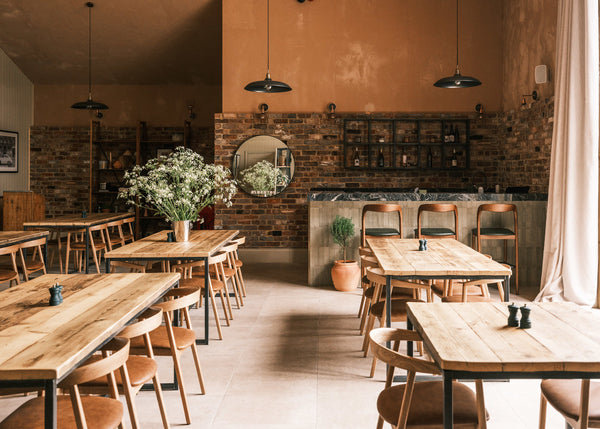
At The Woodman we worked with warm timbers, earthy tones and materials with tactile integrity. Nothing overly polished. Nothing competing for attention.
The most enduring interiors reveal themselves gradually. First you register comfort. Later you notice the joinery, the texture, the way light rests on surfaces. If everything competes at once, it rarely lasts. Layering creates longevity."

Lighting plays a central role in that atmosphere.
Inge: "Definitely. Lighting is the emotional framework of a room. Materials set the tone, but light determines how people feel within it.
In hospitality, guests decide very quickly whether they’re comfortable. That instinctive response is largely driven by lighting. Too bright and the space feels exposed. Too dim and it feels uneasy. The balance has to feel natural.
At The Woodman we designed a layered scheme rather than relying on a single dominant fitting. The Burnham fabric dome pendants in olive work quietly with the brass and timber throughout the space. Fabric diffuses light beautifully. It removes glare and softens contrast, which is important in a pub environment. Over tables they create warmth that feels more domestic than commercial.
We used the Henley globe wall lights to introduce clarity without harshness. Glass carries brightness lightly, which prevents the room becoming visually heavy while maintaining warmth.
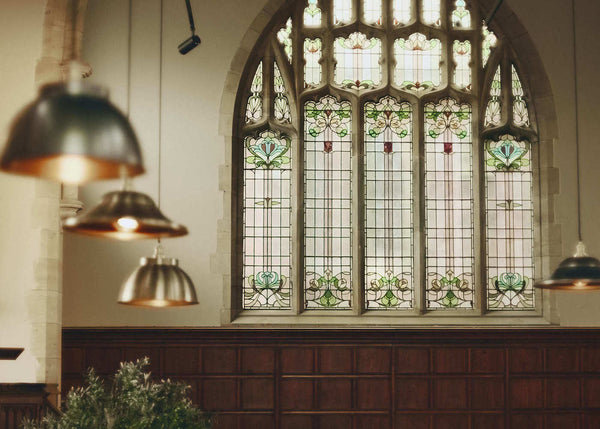
In transitional areas we used bulkhead fittings with hammered glass. The metal adds weight and permanence, and the textured glass softens the beam. Those pieces ground the architecture.
The Albany wall lights are a favourite. Contemporary classics which look fabulous against the timber panelling. They work to lower the visual plane of light. Wall lighting is often underestimated, but it’s what makes larger rooms feel more intimate. It creates zones without physical barriers.
Good lighting allows the building to evolve throughout the day. Morning feels open and easy. By evening, the same space becomes more intimate. Nothing structural changes, only the experience shifts.
In the evening especially, fittings should glow rather than perform. The best lighting holds a room together without drawing attention to itself."
[SIDE-BY-SIDE]


[/SIDE-BY-SIDE]
Collaboration with brands often shapes the final atmosphere. How did working with Industville influence the project?
Inge: "Well we’ve had a longstanding partnership with Industville. There is barely a project where we haven’t used their lights. So Mara understands what we are looking for. The best supplier relationships feel collaborative rather than transactional.
With Industville, lighting was part of the early design conversation rather than a late-stage selection exercise. We discussed proportion, scale and tone; how the fittings would sit within the timber architecture and how low pendants could comfortably drop over tables without overwhelming the room.
Working with Mara (Miller) is always valuable because she approaches lighting from a design perspective. We were considering atmosphere as much as specification.
Proportion matters enormously. A fitting should contribute presence without dominating. The Burnham pendants achieved that balance. They have warmth and substance, but they sit comfortably within the architecture.
When a manufacturer understands the intent behind a design decision, refinement becomes possible. The lighting becomes integrated rather than applied."
You seem very particular about the products you select.
Inge: "Durability is non-negotiable in a neighbourhood pub.
Furniture moves constantly. Surfaces are cleaned repeatedly. Lighting operates for hours every day. Products must age well.
I look for materials with integrity: solid construction, thoughtful detailing, appropriate weight. The Burnham pendants combine warmth with robustness. They feel grounded rather than decorative.
When something ages well, guests don’t consciously notice it, but they feel comfortable returning. Longevity is part of hospitality."
[P2-P2]
Hospitality design seems to be moving closer to residential design. Are you seeing that?
Inge: "We’ve been designing for this shift for years. Hospitality used to prioritise spectacle, but we’ve always focussed on authenticity and community. Now guests are also looking for restoration.
People spend their days in high-stimulus environments. When they enter a pub, they want ease. Softer lighting, warmer palettes, more layered materials. Not a literal living room, but something emotionally familiar.
We create rooms within rooms: banquettes, window tables, slightly enclosed corners. Guests can choose how visible or social they want to be. That sense of choice creates immediate comfort.
Comfort isn’t trend-driven. It’s human."

Can those principles translate into homes?
Inge: "Homes can absolutely learn from hospitality layering.
Many domestic spaces still rely on a single overhead fitting, which creates exposure. Layered light changes everything: pendants for warmth, wall lights to soften edges, table lamps creating smaller pools.
Lower colour temperatures and fabric shades reduce contrast and create calm.
Acoustics and sightlines matter too. Curtains, rugs and textured surfaces absorb sound. Joinery or lighting beside a seat creates a sense of shelter.
When layers are considered properly, people relax instinctively."
What did you want guests to feel when they first walked in?
Inge: "Relief. A sense of belonging. An exhale.
We spend much of our time in spaces that demand attention. A pub should offer the opposite. It should allow people to pause.
If guests return regularly and stop noticing the design entirely, then it has succeeded."
And now, with the doors open?
Inge: "Now it belongs to the community.
Design prepares the setting. Over time the space fills with memory; shared meals, winter evenings, familiar faces.
If we’ve done our work well, the interior supports those moments quietly.
A good pub doesn’t just perform well. It anchors, and endures."
Planning a custom project?
Get in touch with our trade team to explore what’s possible: sales@industville.co.uk
[B]Apply For a Trade Account[/B]
Image credit: nicksmithphotography.com